-
-
-
Kwapa Road, Tororo District
x
l
o
a
d
i
n
g

MOs Training on Core Humanitarian Standards
MOs Training on Core Humanitarian Standards
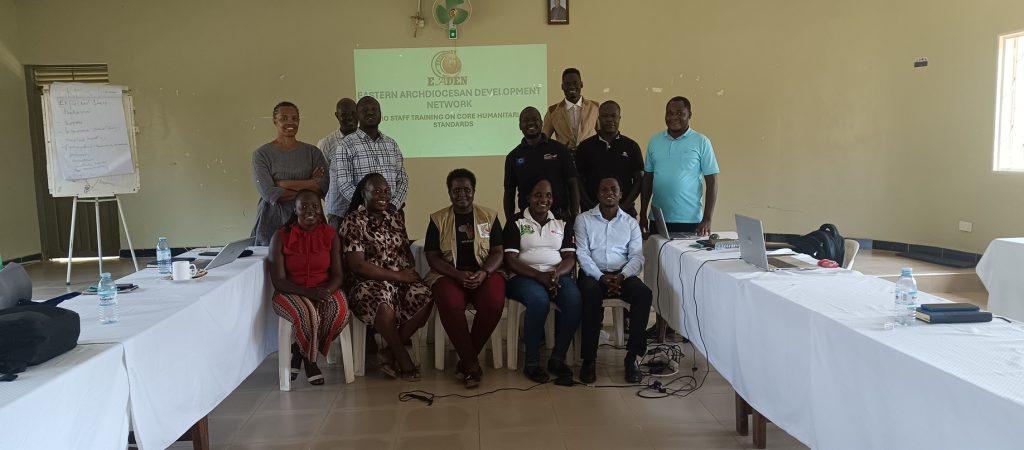
The Eastern Archdiocesan Development Network (EADEN) successfully conducted an induction and refresher training on the Core Humanitarian Standard on Quality and Accountability (CHS) for staff from Caritas organizations within the Tororo Ecclesiastical Province. The training took place at Eneku Village in Soroti Diocese from 24th–25th November 2025 and brought together senior staff responsible for humanitarian programming and institutional leadership.
This capacity-strengthening initiative was aimed at enhancing the quality, accountability, and effectiveness of humanitarian response in line with global and Caritas standards.
Strengthening Humanitarian Practice and Accountability
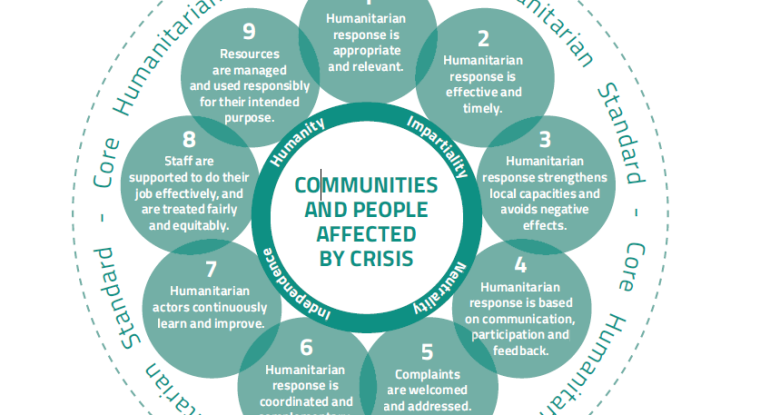
The training focused on the Core Humanitarian Standard (CHS), which guides humanitarian organizations to ensure that crisis-affected communities are placed at the center of all interventions.
Participants were trained on, the nine CHS commitments, key actions, and quality criteria that shape accountable and people-centered humanitarian programming. The training also reinforced ethical principles embedded within the Caritas Internationalis Management Standards, particularly humanitarian ethics as a cornerstone of service delivery.
Participation and Representation
The workshop brought together 12 (5F, 7M) senior staff members from each of the Caritas dioceses of:Jinja, Moroto, Kotido and Soroti .In addition, representatives from the EADEN Secretariat participated, ensuring shared learning and alignment across member organizations of the Caritas network under Caritas Uganda and the wider Caritas Internationalis.
Key Highlights of the Training
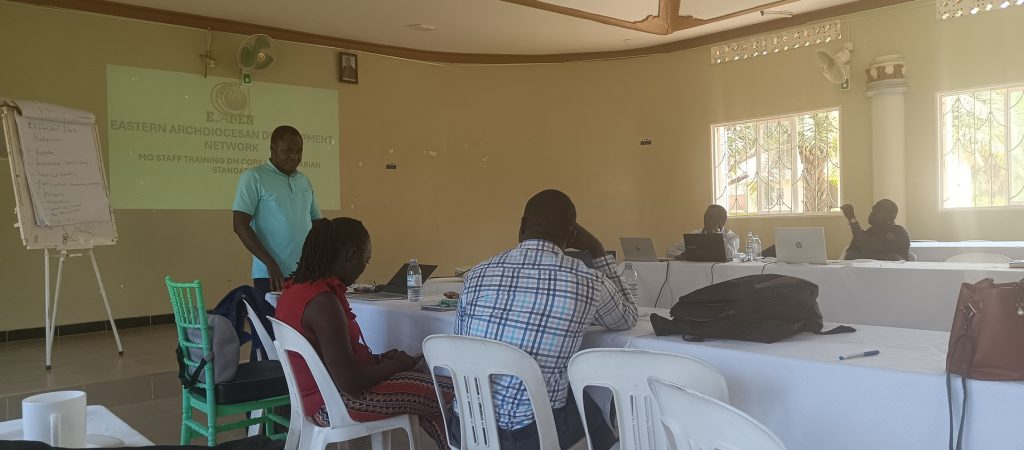
Over the two-day interactive training, participants engaged in:
- Practical sessions on integrating CHS into the project cycle
- Group exercises on humanitarian accountability and ethical practice
- Experience sharing across dioceses with different levels of CHS application
- Organizational self-assessments on compliance with CHS standards
- Discussions on strengthening staff conduct in humanitarian response
The training methodology combined expert facilitation, peer learning, and real-life case reflections, enabling participants to translate CHS principles into practical programming tools.
Outcomes and Key Gains
By the end of the training, participants were able to:
- Clearly understand the nine CHS commitments and their application
- Identify gaps in current organizational compliance with CHS
- Strengthen skills for integrating accountability into humanitarian programming
- Improve understanding of ethical responsibilities in humanitarian response
- Develop action points for strengthening CHS implementation within their institutions
The training marked an important step toward harmonizing humanitarian standards across Caritas organizations in the region.
Commitment to Continued Capacity Strengthening
The EADEN Secretariat reaffirmed its commitment to supporting member dioceses in strengthening institutional systems, staff capacity, and accountability mechanisms. This initiative is part of ongoing efforts to ensure that humanitarian interventions remain principled, effective, and responsive to community needs.
Appreciation
EADEN extends appreciation to all participating dioceses, facilitators, and the management teams of all Caritas organizations for their active engagement and commitment. Special recognition goes to the training facilitator for delivering a highly practical and engaging learning experience.

Leave A Comment